Tag: California Living

Read More

Mourning Moment

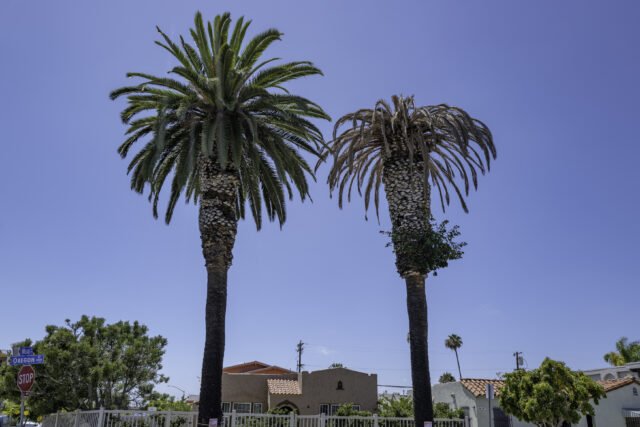
As my wife and I walked up Meade Avenue in North Park, today, a sickly palm caught my attention. Crossing Oregon Street, I saw a white X on the right tree, indicating that city workers had marked it for removal. I am uncertain about the health of the other, but no marking indicates that it isn’t slated to be chopped down.

San Diego fights futilely to hold back advance of the South American Palm Weevil, which was observed along the Mexican border in 2011. The first infestations appeared five years later. The insects essentially infest the heart of the Canary Island Date Palm crown, destroying it.

Read More

Someone Explain This to Me

Please forgive me for being critical, but this is what happens when a state sends mail-in ballots to all (presumably) registered voters: Citizens post on Election Day—that’s for Primaries here in California. I came across this outgoing ballot at 11:09 a.m. PDT and wondered why not mail before the recommended May 31 or take to the dropbox inside the public library, which is a half-mile walk?

Sure, the ballot is valid if postmarked today but why wait until voting day if the plan is to post? Call me confused, which wouldn’t be unusual, but still… My other question: Which is more secure—the vote mailed or cast live? I ask because the local polling place doesn’t check IDs; not today, anyway. At least the mail-in ballot envelope has the citizen’s name and signature. I dunno. You tell me.

Read More

Jeopardy Answer: In California. Question: Where are Bees Fish?

Yep. Last week a court basically reclassified bumble bees as fish. Where else but California could one thing that is be called something it ain’t. Hehe, it’s the craziest, but not necessarily intentional, twist on identity politics yet. Someone tell me: What’s the appropriate pronoun, so I don’t offend anything that flies or swims?

The problem, if you can call California legislative narrowness anything less, is the definition of protected species used in the 1970 Endangered Species Act. Amphibia. Check. Bird. Check. Mammal. Check. Reptile. Check. But, whoops, somebody overlooked insects. Which is how through one court proceeding and appeal the definition of fish now applies to some bees.

Read More

The More You Pay, The More You Will Pay

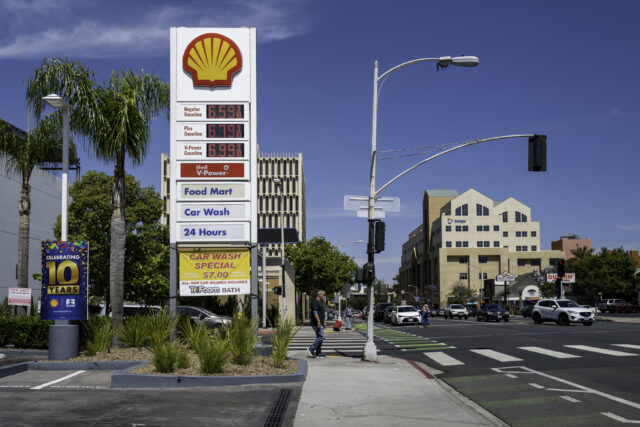
Funny the things you long for. On Oct. 15, 2021, I shared a photo showing the cost of gasoline as $4.94 a gallon (rounded up) at the Fourth and University Shell station in Hillcrest. Fast forward to today and you pay $6.60 per gallon (again, rounded up). That $1.66 more than the old price—high for the time—seems oh-so affordable now. By the way, cost is 33 percent more than before.

Several large hospitals surround the station, and I got to ask: Is this why medical services—like ambulance—cost so much in San Diego? Yeah, the question is facetious. That said, unless the arm is severed and shooting blood, wrap a tourniquet and drive yourself to Emergency—and hope none of the doctors and nurses treating you filled up at this Shell. Somebody has to pay, and that could be you. Yuck. Yuck.

Read More

Better Bee Reading

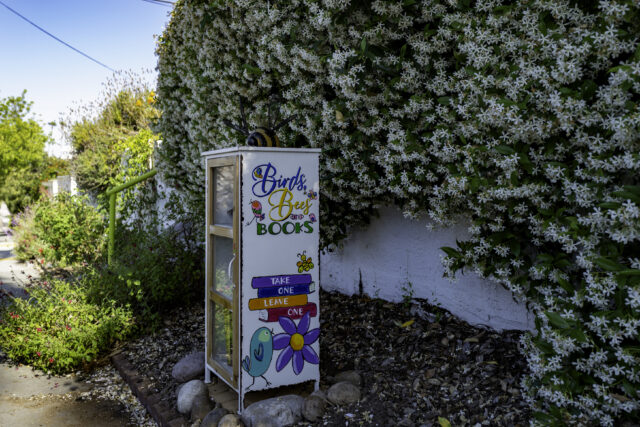
Outside the “1917 House“, where also is the little homes collection, my wife and I came upon something new: cute book-sharing repository. Unlike others around our neighborhood of University Heights, this one doesn’t bear a LittleFreeLibrary label. I’m good what that distinction. This thing is fresh and oh-so Spring. Correction: Early Summer, in San Diego. (The other two seasons are Mid Summer and Late Summer. I know, I know, you don’t have to say it.)

During post-production, I recomposed the Featured Image to give more space to the honeysuckle, which sweet succumbing scent is such a relief from toxic construction dust and stink weed smoke (the latter disgusts my nostrils). Aroma and ambience make Birds, Bees, and Books an appealing pitstop. But do watch out for the stinging insects buzzing by searching for nectar.

Read More

Chopped Before Its Time

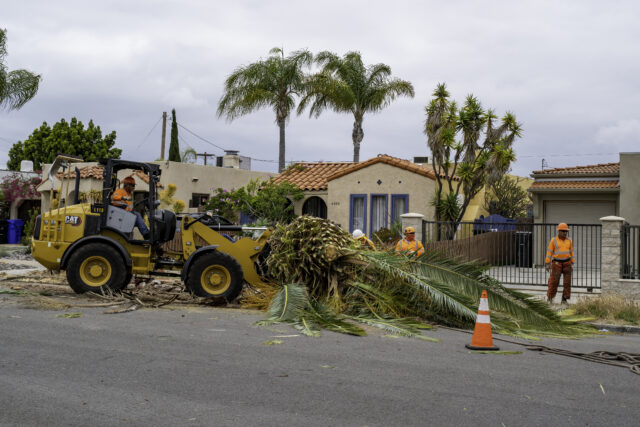
While walking West on Monroe Avenue, in San Diego’s University Heights neighborhood, my wife and I could hear tree cutting as we approached cross-street Georgia. Sure enough, to our left, going towards Mission, a work crew cut and carted two palms. We had to investigate.

As you can see from the Featured Image and companions, all captured using Leica Q2, an extremely healthy-looking palm top is lifted and dumped. I wondered why and what was chopped. Annie and I walk down this street somewhat regularly, not recalling any recent road signs or other indications that the city would destroy more trees.

Read More

No, It’s Me Watching You

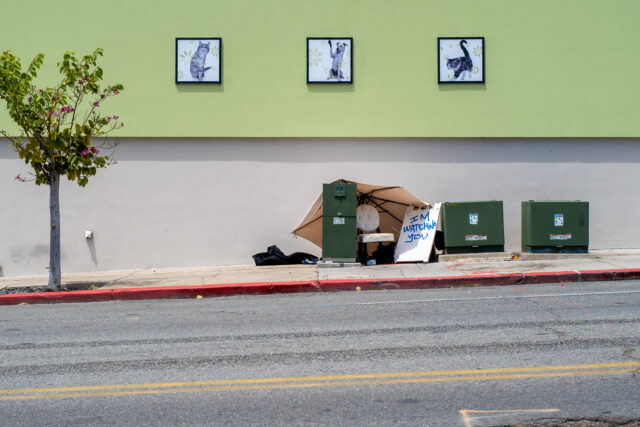
On University Avenue in San Diego’s North Park neighborhood—alongside Bohdi Animal Hospital, across from Smart and Final—is a fitting homeless habitat. That is, if you go for the stereotype of some street-living person paranoid about government surveillance, which could include nanites from SARS-CoV-2 (severe acute respiratory syndrome Coronavirus 2)/COVID-19 vaccines. The sign says it all, in a triumphant tables-turning warning to the spies.

Today, as my wife and I waited for our turn to cross the street, I pulled around Leica Q2 for a single shot. Because, ah, someone watched me, speed mattered. The Featured Image is a close-crop, and, yes, University slopes along that stretch at Mississippi.

Read More

This is Progress?

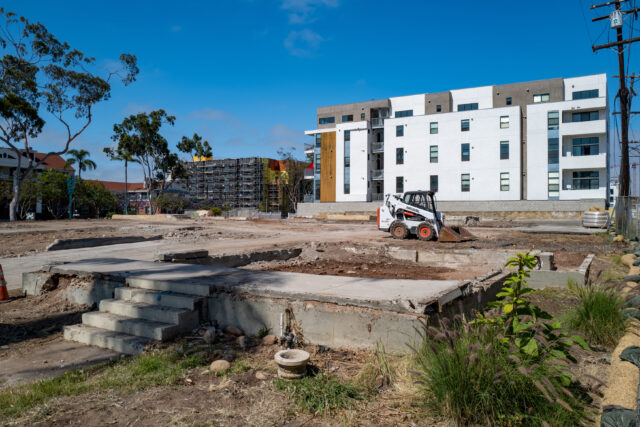
I am not obsessed with the construction site at El Cajon Blvd and Louisiana Street, despite the number of recent photos and commentaries about it: Cave’s Grave; Wonder Wall; Shattered Serenity; Postal Convenience Center. My interest is what the project represents to San Diego neighborhoods Hillcrest, North Park, and University Heights, where relaxation of zoning rules is bringing down charming businesses and homes and replacing them with high-rises that are way out of character with the area.

The Featured Image, taken on May 7, 2022 using Leica Q2, captures before, during, and after multi-unit construction. Foreground looks across the aforementioned recent demolition to a four-story residential complex at Mississippi, overlooking the recently relocated Red Fox Steak House.

Read More

Decorating the Cave’s Grave

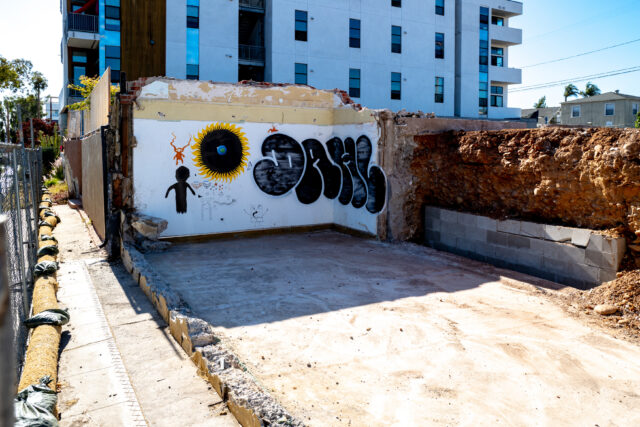
The demolition site at El Cajon Blvd and Louisiana Street in University Heights returns five days later, because of alterations. Remnants remain of the Cave of Wonders building, but somebody has graffitied over some of the doodle drawings of the still-standing inner wall.

In reviewing the Featured Image, I see another change: The livable-looking property that was to the right behind in my previous shots is gone. Vitals, aperture manually set: f/8, ISO 100, 1/160 sec, 28mm; 4:48 p.m. PDT; Leica Q2.

Read More

The Better Barrier

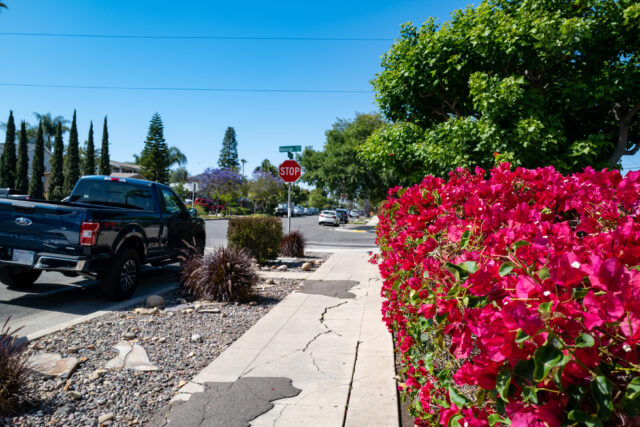
Across my San Diego neighborhood of University Heights, increasing trend: homeowners surround their front yards with obnoxious fences that while providing privacy create fortress-feeling and block residents’ view of surroundings—and beneficial sunlight. If you want to live in a dungeon, please sell your property to someone who will appreciate the local climate and move elsewhere. Perhaps Chicago, where you can add bars to all the windows, too.

Contrast that to the Featured Image, taken today using Leica Q2. While walking past this hedge, and not for the first time, I stopped to really look at its lovely practicality. The residents have privacy, which includes keeping dogs from peeing or poohing on the lawn, while providing a natural, beautiful barrier for their enjoyment and for other people.

Read More

Shattered Serenity

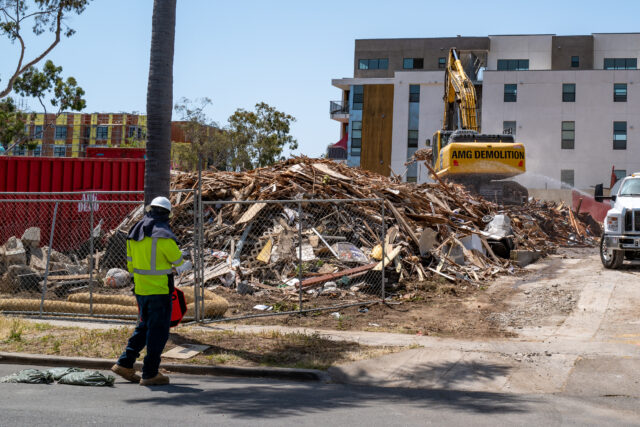
The difference 24 hours make. Yesterday, the abandoned houses still stood along Louisiana Street at El Cajon Blvd. Today, they—and the businesses around the block—are gone. The Featured Image captures something of the devastation. Vitals: f/8, ISO 100, 1/320 sec, 28mm; 1:26 p.m. PDT. This one and the others come from Leica Q2, aperture manually set for all.

My wife and I have known since summer last year what would happen along one of my favorite blocks in San Diego’s University Heights neighborhood. Two cottage complexes, a few modestly-rising apartment buildings, and bunches of single-story houses—with vast swaths of grass and greenery in an area otherwise converting to cement—create calming ambience. The street is, or was, surprisingly serene. Three residential properties on Louisiana and businesses half-way to Mississippi along The Boulevard are gone.