A common misconception about inflation is that prices go up, when in reality the value of money (e.g. spending power) goes down. The Economist explains the classic case: In late-1923 Germany, when, because of hyperinflation, “a loaf of bread cost 140 billion marks. Workers were paid twice a day, and given half-hour breaks to rush to the shops with their satchels, suitcases, or wheelbarrow, to buy something, anything, before their paper money halved in value yet again”.
I got a taste, quite literally, of what this phenomenon is like, and I present it as a demonstrative model for your education. Pizza Hut gives so-called “Hut Rewards” points for redeeming menu items. I had accumulated just more than 600. Large pizzas with any toppings are 300 points, so I had gained enough for two free pies.
But when I signed on to order this afternoon, Pizza Hut—or rather the third-party company administering the program for the take-out restaurant chain—had inflated my points to just over 3,000. My pulse raced, my mind wondering what I had done to accumulate the equivalent of 10 pizzas!
I assembled the pizza, wondering how the new point system would work. I presumed that whatever else, I should still be able to redeem two pies. Oh, the shocking, cruel reality sent chills down my torso. Large, any-topping pizzas now require 3,000 points! My points had inflated five times, but my buying power decreased by half—meaning I lost one free pizza.
That’s not a bad example of inflation. Pizza Hut inflated my points while reducing their value. My 600 points were much more valuable than the re-rewarded 3,000. I didn’t pay attention to how the points previously increased. Under the new scheme, 10 points are earned for every dollar spent. So that works out to spending $300 to earn one, free any-topping pizza. Whoa.
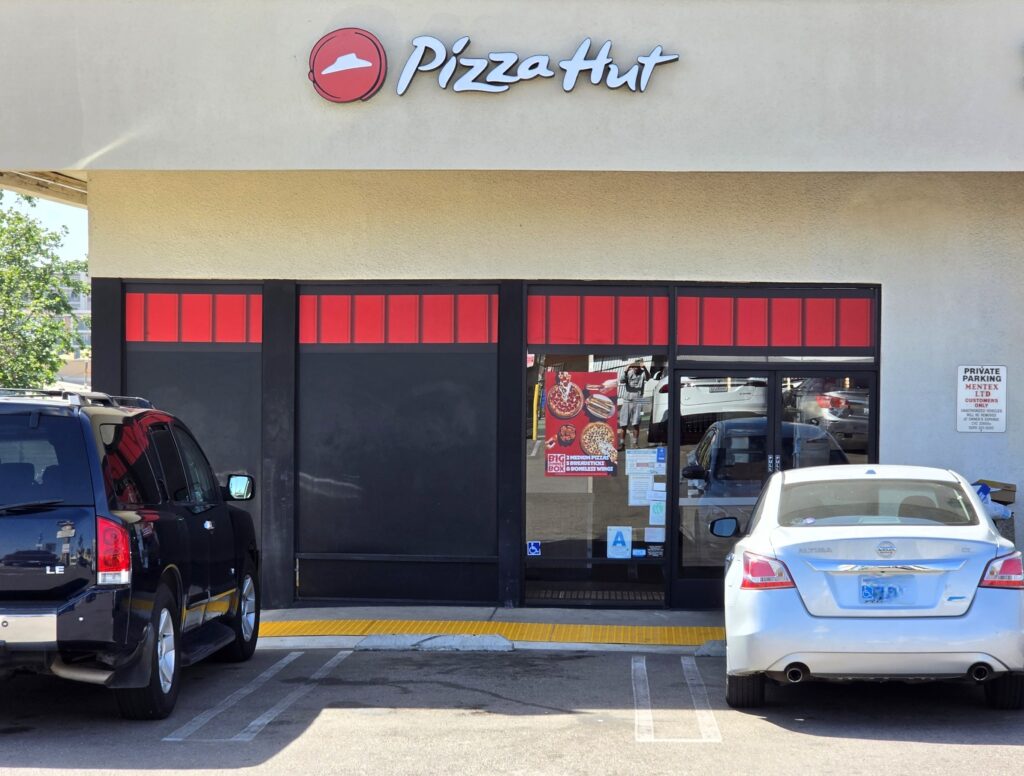
The Featured Image comes from Samsung Galaxy S26 Ultra. Vitals: f/2.4, ISO 32, 1/355 sec, 69mm (film equivalent); 2:57 p.m. PDT.