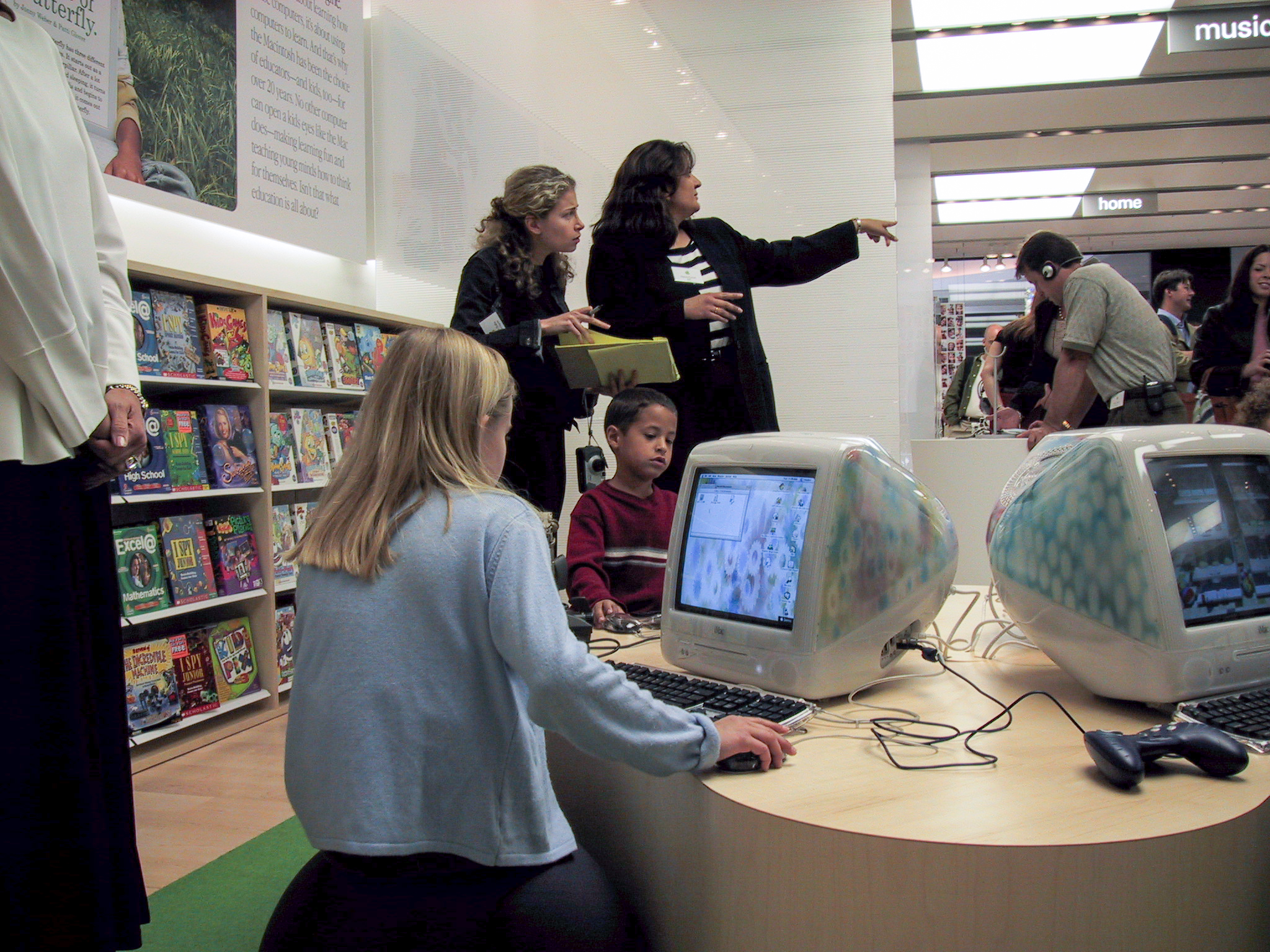
Twenty-five years ago today, the first Apple Store opened at Tysons Corner Center in McLean, Va. I was there, covering the event for CNET News. Four days earlier, then CEO Steve Jobs briefed journalists and a handful of bloggers (an oddity back then) across the way at upper-scale Tysons Galleria. Skepticism hung heavy in the air, with respect to Jobs’ ambitions. Recession gripped the country and rival Gateway was in process of shuttering more than 400 retail shops. Everyone knew: Jobs was either genius or crazy.
But companies that take big risks during economic downturns are most likely to reap rewards later. Retail would be Apple’s third walk across the tightrope during 2001. The others: iTunes (January); OS X (March); iPod (October). I’ve said before that these four are foundation for all the company’s successes that followed, including iPhone.
Derivative, but important investments—namely the shift to Apple Silicon—later paid off handsomely across all hardware form factors and lead to the recently released MacBook Neo, which cleverly disrupts its price-market segment. The company’s new, incoming CEO, John Ternus, joined team bitten-fruit in 2001. So that potentially makes a fifth investment made that year of consequence for future success.
Risky Business
But 25 years ago, battling the Wintel duopoly with less than 2 percent global PC market share, Jobs figuratively walked a tightrope across the Grand Canyon carrying original Macintoshes in each arm.
Apple’s cofounder set an ambitious goal of achieving 5 percent global PC market share by selling a digital lifestyle around the Mac and supporting software as a hub. He also sought to promote the fruit-logo brand in high-traffic locations. For example, when Apple Store opened, Tysons Corner Center averaged about 57,000 customers a day—or more than 21 million shoppers a year. He also wanted to take control of the sales process, which often was lost in computer stores, where Windows PCs reigned king.
Two decades-and-a-half later, Apple’s PC market share is 9.5 percent worldwide, ranking fourth, according to IDC. Not that the achievement much matters. Success selling iPhone eclipses the Mac and accounts for the majority of Apple revenues; 51 percent during fiscal second quarter 2026. (Services follows at 27.8 percent.)
Look Inside
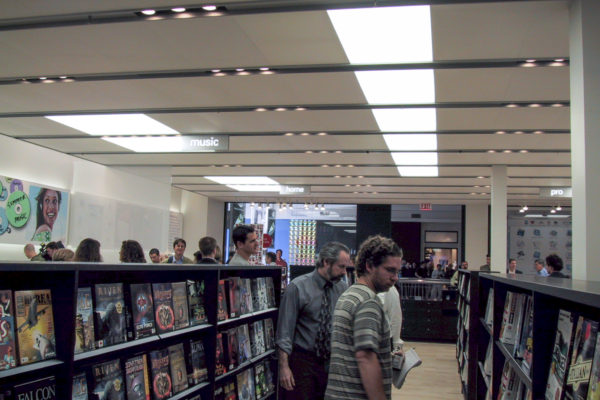
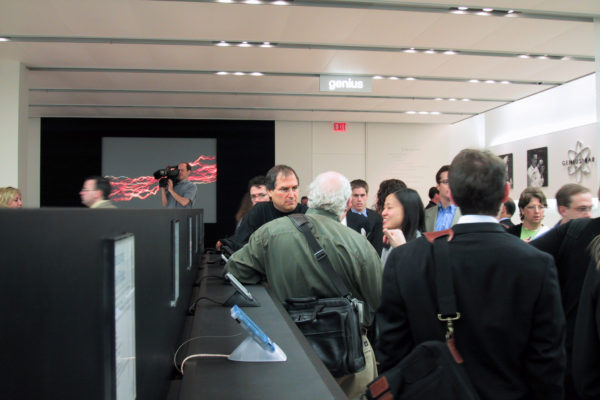
Apple Store’s look was unique and quite distinctive in 2001, particularly for a shop selling computers. The style has been widely imitated. Here’s how I described the Tysons shop 25 years ago today:
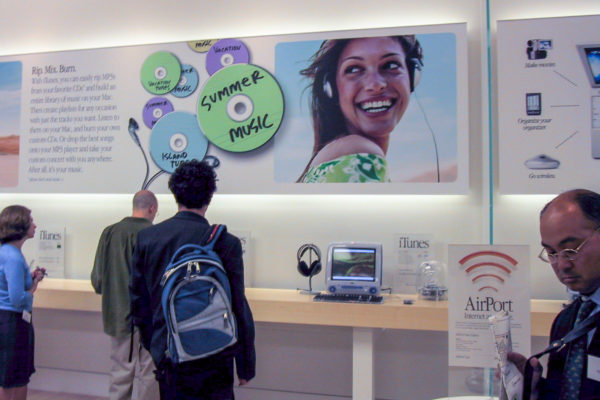
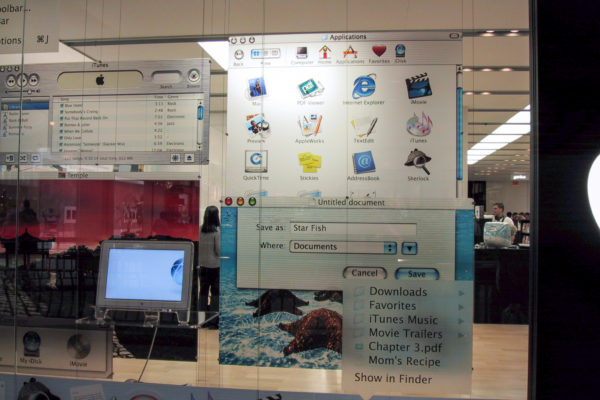
The store sports hardwood floors, high ceilings, bright lights, and clean lines—similar to the look of the trendy clothing retailer Gap. The similarity is not surprising, considering Mickey Drexler, CEO of the Gap, is a member of Apple’s board. [San Francisco-based Fisher Development, which also constructed Gap stores, built the first Apple retail shops.] Contributing to the clean look of the store is the lack of network cables connecting computers to the Internet, as Apple has incorporated AirPort wireless networking to link Macs and other products to the Net.
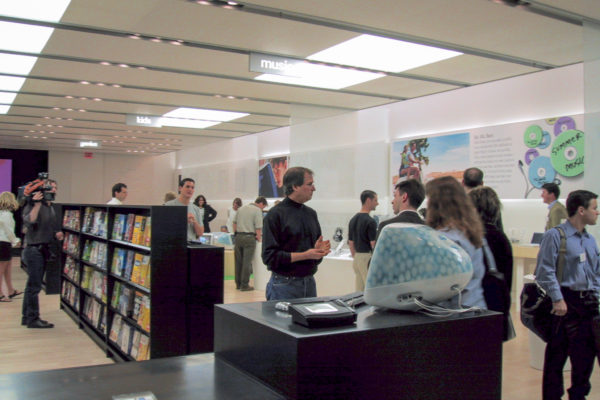
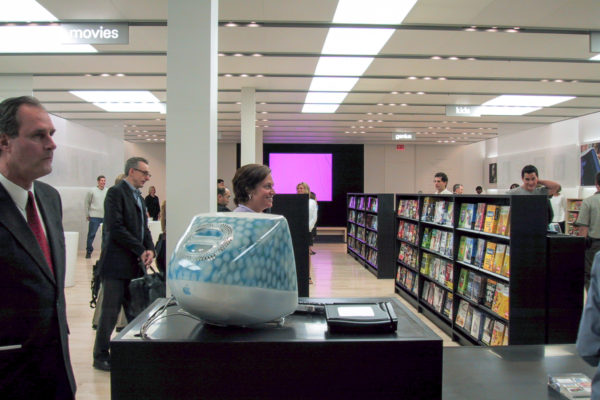
The high ceilings and wide space—4,500 square feet—made Apple Store No. 1 feel more open and less cluttered than other computer stores of its day and since. (Microsoft Store copied the approach but gave up physical retail about six years ago.) The shop’s design then and now is consistent with Apple’s generally understated approach to design. Even the more grandiose shops featuring walls of glass are understated, as much in 2026 as Tysons was 25 years ago.
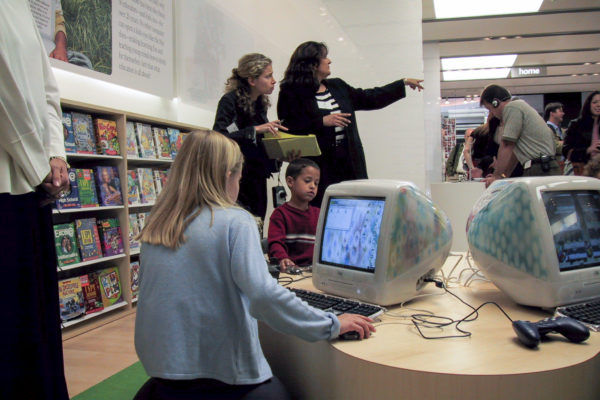
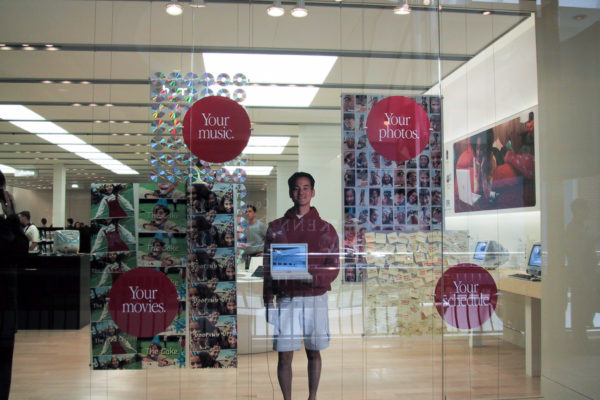
The only bright colors were found on marketing materials placed throughout the store. Otherwise, the tasteful store was quite stark, so that the shoppers’ eyes were drawn either to the colorful marketing posters and signs or to the products on sale. Low tables drew shoppers’ eyes down to the products. Goods placed at eye level actually create distraction—there is too much else to see. Apple used the low-table concept well at the Tysons store and improved it in following redesigns.
Five Things
Repeating and expanding on Job’s previously stated goals, Apple Store was about five things:
1. Expose more people to the Apple brand and products.
2. Invite new users to the Apple experience—the Apple community.
3. Provide a place where Apple could showcase the benefits of the Mac lifestyle.
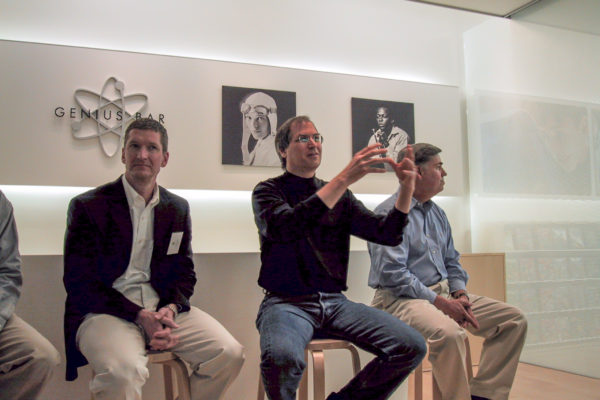
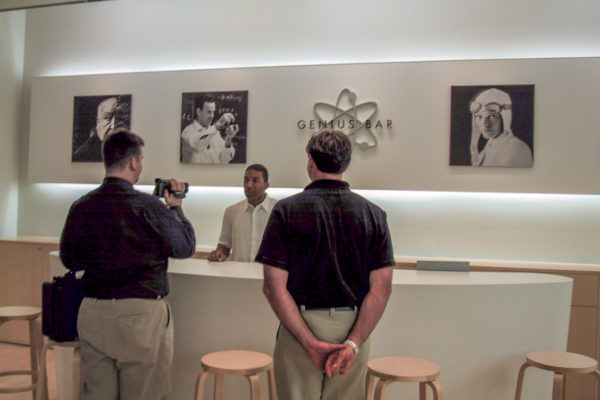
4. Through the Genius Bar, give customers a place to come to for technical assistance.
5. Hone Apple manufacturing and distribution, which would later benefit products like iPod, iPad, and Apple Watch.
Four Quarters
The store’s design reflected these five goals and the layout organized into four distinct quadrants. The first quarter, Home and Pro, featured Macs for business—Power Mac, Power Mac G4 Cube, and PowerBook G4—and iBook and iMac for home.
Music, Kids, Movie, and Photos made up the next two quarters, what Apple called Solutions, where the tots could play games on iMacs, shoppers could use digicams to take photos and make movies, or people could create music CDs. “You can make a movie in the movie section”, Jobs said during the May 15, 2001 press briefing, or “burn a CD right in the store” to take home. Such activity was simply unheard of anywhere in computing retail at the time—make it, burn it, and take it to go. Related, Jobs said that shoppers would be encouraged to take time using Macs to do these activities. About 18 months earlier, Apple’s CEO started pitching Macintosh as the aforementioned “digital hub” for creating content. Letting people play in the stores helped introduce Windows users to the Mac lifestyle. Of course, Apple stores are so busy today, it’s difficult to play this way.
Down the store’s middle was Software Alley, where Apple also displayed six models each of digital cameras, digital camcorders, MP3 players, and PDAs. Anyone remember Palm handhelds or Rio music players? Apple once sold them. Software Alley is long a relic of the past. Apple has relegated software to the side walls—what little there is. Mac App Store inside OS X offers cleaner, faster distribution.
The final quarter, at the back of the store, was strangely themed Etc. This is where Apple placed larger peripherals, such as printers and scanners, a huge gallery with 10-foot video screen (for software and video demonstrations), and the Genius Bar. Long gone: The red phone—or “hotline”. Jobs said that if the Genius couldn’t answer the technical question, he or she could phone for help. It was a cute marketing gimmick supplanted by Web search. Twenty-five years ago, people walked up to the Genius bar, sat on a stool and asked for help. Today, they must make an appointment first, and many support services are either AI-automated or carried out online.
Bigger Than Ever
Twenty-five years later, Apple commands a global brand, with billions of iOS devices actively used daily. Customer satisfaction and retention matter even more, particularly as the pace of innovation slows and competition from Samsung and Chinese manufacturers increases in the smartphone segment.
All the while, retail expansion accelerated, supporting Jobs’ aforementioned goals. The company operates about 540 Apple Stores globally, and the presence is essential to customer retention and expansion.
What a difference a quarter century makes. In second quarter 2001, ahead of the first store’s opening, Apple revenue reached $1.43 billion. Same period in 2026: $111.2 billion. It’s not even the same company, from that perspective. The boutique brand buoyed by loyalists in 2001 is a consumer juggernaut today. Apple Store played a vital role in that transition.
Happy 25th birthday, Apple Store.
The slideshow is comprised of photos I shot during the May 15, 2001 press event with Steve Jobs. Camera: Canon PowerShot S20, which was one of the first two 3-megapixel compact digicam available.