Category: Mobility

Read More

Microsoft Investors Punch Back at Apple

In May 2010, I wrote about Apple’s market cap passing top-valued Microsoft; it’s only fitting to follow up with an analysis about the unbelievable turnabout that, like the first, marks a changing of technological vanguards. Briefly today, the software and services giant nudged past the stock market’s fruit-logo darling. A few minutes after 1 p.m. EST, the pair’s respective market caps hovered in the $812 billion range, with Microsoft cresting Apple by about $300 million. By the stock market close, a rally for Apple put distance from its rival: $828.64 billion to $817.29 billion, respectively (Bloomberg says $822.9 billion, BTW). Consider this: As recently as October, Apple’s valuation touched $1.1 trillion. But since the company announced arguably record fiscal fourth-quarter earnings on November 1st, investors have punished shares, which currently are down about 21 percent.

Apple has long been a perception stock, even when under the tutelage of CEO Tim Cook company fundamentals deserved recognition. But perhaps Wall Street finally realizes the problem of iPhone accounting for too much of total revenues at a time when smartphone saturation saps sales and Apple pushes up selling prices to retain margins. More significantly: Apple has adopted a policy of fiscal corporate secrecy by stepping away from a longstanding accounting metric. I started writing news stories about the fruit-logo company in late 1999. Every earnings report, Apple disclosed number of units shipped for products contributing significantly to the bottom line. No more. Given current market dynamics, everyone should ask: What is Cook and his leadership team trying to hide? 
Read More

My Google Store Travail

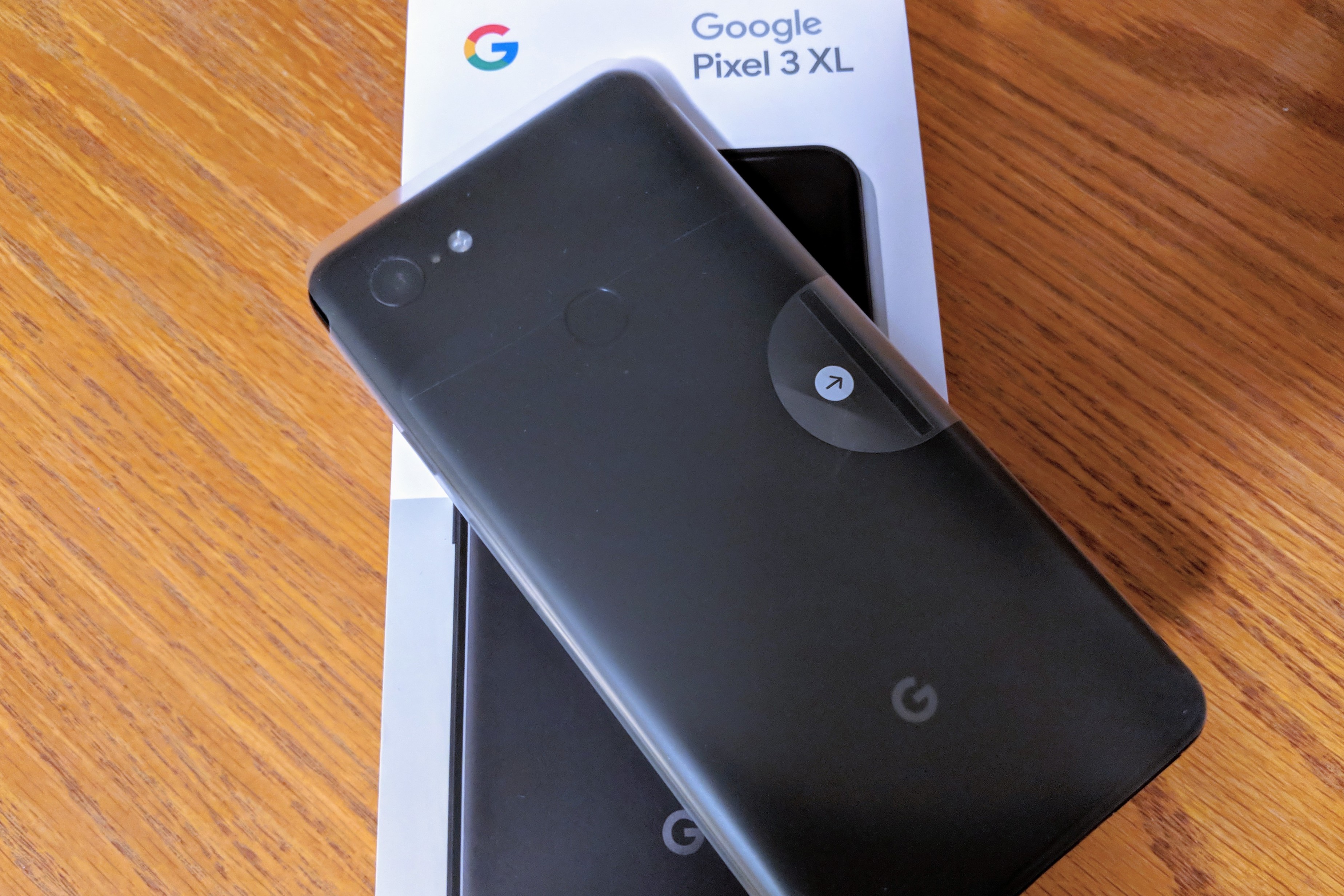
Google Store’s bureaucratic ineptitude is beyond belief. My recent, unresolved customer crisis is an experience in artificial unintelligence. For a parent company whose core competency is supposed to be indexing, crunching, and disseminating information, it’s inconceivable that something so simple as fixing a single order error could escalate into a tragically comic Catch-22. I should have abandoned all efforts long before reaching the point of penning this post and looking back to the Apple Way.

To summarize: I received the wrong Pixel phone nearly a month ago. Google Store struggled to process a return authorization, because the device in hand didn’t match the one in the order. I eventually agreed to keep the thang, so long as the retailer could transfer the extended warranty—so-called “Preferred Care”—that I had paid for. But the process proved to be complicated, then necessity, after I unexpectedly needed to file a damage claim. You’ll have to read on for the sordid punchline, but suffice to say it all ends in a comedy of compounding errors.

Problems resolved! Please see:Thank-you, Google Store

Read More

Google’s Newest Pixel Phone Color: Not White

Perhaps you know that the newest Google Phones come in “Not Pink”, as a third color choice. I discovered a fourth today when receiving a Pixel 3 XL “Just Black” instead of the smaller Pixel 3 “Clearly White”. Three support calls—spanning more than two hours—later, Google Store specialists struggled to resolve the order error. In their database, my “Not White” XL shows up as a retail model, based on the IMEI, which in no way resembles the number for the device supposedly shipped (and, of course, wasn’t). I did receive Pixel Stand, as expected, so that’s something right.

There is an absurdity about Google making me prove the error by providing photos of the shipping label, phone, and product box because they’re “vital for our investigation”. I obliged about the label, because the correct order number is on it. Request for phone pic came later, and to that I balked. The IMEI should identify model and color, but the image is necessary to truly confirm color is black—or in Joe’s new parlance “Not White”—a store shipping specialist explained. That’s not my problem. Truth will be confirmed when the phone is received, right? Wrong. 

Read More

Apple’s Top-Tier iPhone Price is a Rainy Day

Trendsetter Apple has done it again! Just when you thought there was no innovation left in the smartphone market, CEO Tim Cook delivers the wildly price-disruptive iPhone XS Max 512GB for heart-stopping $1,449. Smartphones simply don’t cost this much. What other company would stoop so low by reaching so high? This thing is a monster with its 6.5-inch (nearly) edge-to-edge display; 2688 x 1242 resolution at 458 pixels per inch (less than Google Pixel 2 XL at 2880 x 1440 and 538 ppi); and dual-SIM support (so telemarketers can ring more often on two numbers).

For anyone whose hands aren’t too small to hold the new thang, iPhone XS Max is sure to draw maximum attention, letting all the little people know just how big deal you are. Praise be Mr. Cook. Only the privileged can afford this beautiful, beastly slab, short of taking out a second mortgage or cashing in their 401K. 

Read More

Quick Update: My Apple to Google Switch

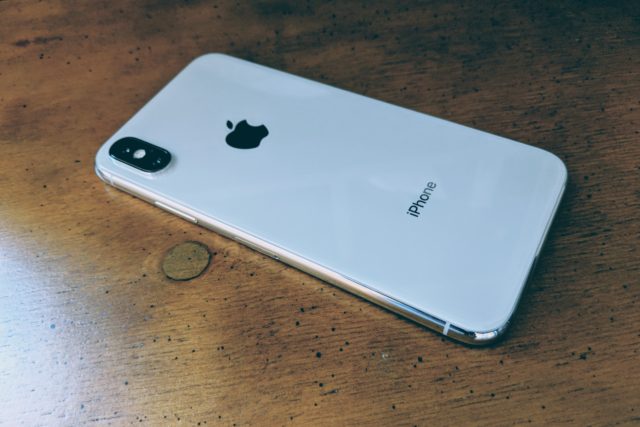
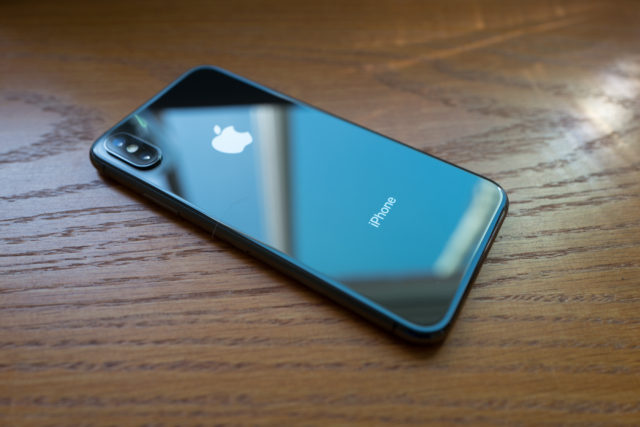
Doubt disturbed my commitment to give up the Apple Way for the Google lifestyle two months ago (yesterday). Preparing to pack up my wife’s 64GB white iPhone X, I was taken aback by how pretty it was. She kept the thing in a case, which protected from damage but also obscured beauty. For fleeting seconds, I wondered why switch. Product design that generates joy is another benefit—and one transcending any, and every, feature.

But the moment passed, and I boxed up Anne’s smartphone along with my 256GB black iPhone X. Google gave great trade-in values, which dispatched the hassle of reselling the devices on Craigslist. Eight weeks later, writing this post on Pixelbook i7, I don’t regret the decision. Confession: The transition isn’t quite complete, but we’re getting there. 

Read More

The Worm in Apple’s App Store

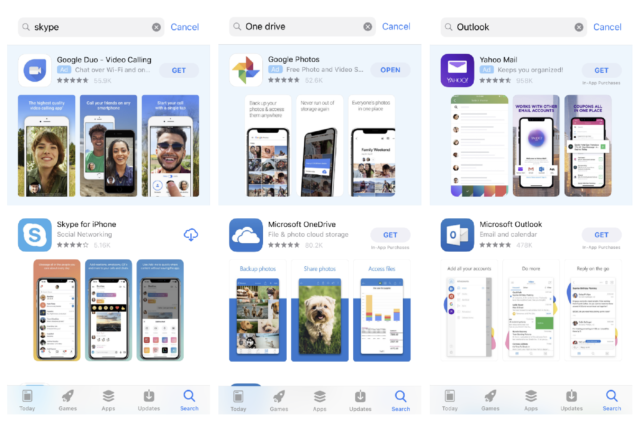
Earlier today, I needed to get Skype onto my iPhone X to receive an overseas call. So I hauled over to the App Store, like any sensible iOS user would do. I was shocked—absolutely floored—to see an advert for Google Duo taking up about half the screen, and appearing above Skype.

You got to ask how many people end up downloading the upper one instead. I don’t often go to the App Store and wonder: How long has been this kind of aggressive placement? Looks like since the recent redesign. 

Read More

Your Behavior Stinks!

A few days ago, BetaNews Managing Editor Wayne Williams emailed asking if I could contribute content after being silent for ages, especially as the site’s 20th anniversary approaches. He doesn’t fathom the potential terror that request will unleash.

I have written a total of two tech stories for BN in 2018—surely to the delight of my many commenter critics. Reason: Joe Wilcox is on a self-imposed writing hiatus as he looks distrustfully at the many so-called innovations that he championed during a 25-year technology reporting career. He is disgusted to see how we have become commodities stored in the pantries kept by Facebook, Google, Microsoft, Twitter, and most every other advert-licking,  AI-snorting, location-tracking, tech purveyor of promises looking to consume us for profit. Burp. 

Read More

Artifacts: Olympus LS-10 Linear PCM Recorder

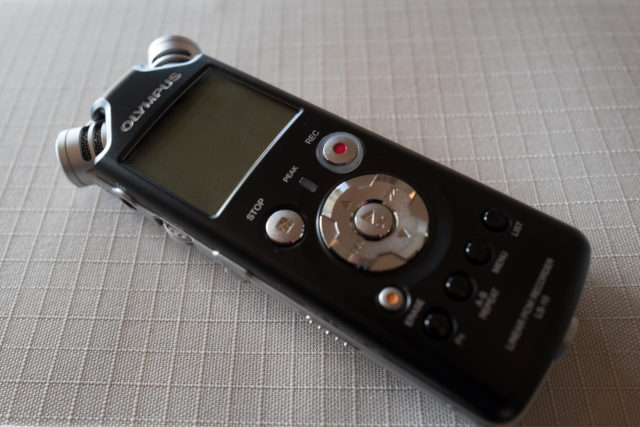
The process of moving residences after 10 years is opportunity to assess objects—and their value to keep or part with and what they once meant. Our garage is a treasure trove of memories and missives, like the Olympus LS-10 Linear PCM Recorder, which I ordered from Amazon on June 9, 2010. Strangely, perhaps ironically, the purpose for which I purchased the device made it obsolete.

On Oct. 12, 2017, I pulled the voice recorder from a box, where it was carefully coddled in a protective case. But both batteries had ruptured, and their acid apparently damaged the circuitry. After being cleaned and receiving fresh AAs, the LS-10 stubbornly refused to power up. Strange that it looks so new and ready to use. No more. I shot the Featured Image with Leica Q. Record button is focal point. Vitals: f/5.6, ISO 400, 1/60 sec, 28mm. 

Read More

Seriously, Verizon?

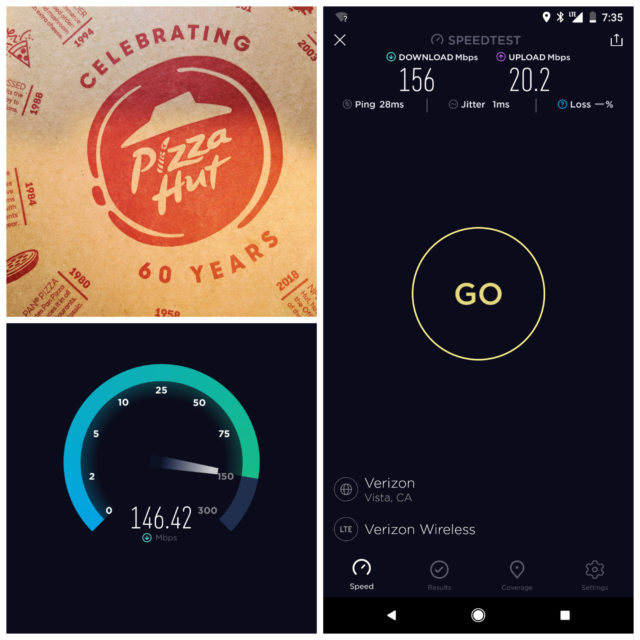
I should have known better. Once burned is supposed to be twice as wary. Right? Disgruntled by pricing and other policies, in autumn 2015, I took my family from Verizon Wireless to T-Mobile, which cut our monthly bill by more than one-third. But in May of this year we made the trek back in part because data speed is so much faster from my apartment than it is with Magenta. Better Red than dead, eh? Wrong. Oh, dumbass me. Un-carrier’s aggressive pricing, and Verizon’s first-ever quarterly loss of post-paid subscribers, compelled the nation’s largest carrier to respond—by, starting in February, to offer comparable unlimited plan that for my family of five lines would cost just $20 more a month while delivering superior, speedy service. But what Red gave, it now takes away. I regret the decision.

Today’s unlimited cellular service plan changes suck some of the most important value from all that extra bandwidth. What good is having something you can’t use? Henceforth, Verizon will offer two consumer options—one (Go Unlimited) that throttles streaming video to 480p on smartphones and costlier option Beyond Unlimited that reduces quality to 720p. Go is essentially priced the same as the older unlimited plan, and it takes away even more: Tethering (e.g. Mobile Hotspot) is capped at 600kbps. There’s no 4G LTE for you, baby!