Tag: housing

Read More

Sale Sofa or a New Car?

Few San Diego neighborhoods can compete with Hillcrest for the financial gulf between those with means and others with little or none. People pay beaucoup bucks to live and party in what I unaffectionately call Hellcrest, where the homeless camp or roam rampant and the housed sidestep those who aren’t like someone might a piece of dog poop.

Sofa sale at one of the finer furniture boutiques had me laughing on Oct. 13, 2022. I can’t say which is funnier: The 50-percent discount or the original price—both of which you can see in the Featured Image, which I captured using Leica Q2 Monochrom through the display window. Vitals, aperture manually set: f/5.6, ISO 200, 1/100 sec, 28mm; 10:37 a.m. PDT.
Read More

The Green No Deal

The most common consequence of new home ownership in my San Diego neighborhood is the obliteration of the green outdoor space. Perhaps the lawn is replaced with gravel, rocks, or sand. Shrubs and/or trees are chopped down, replaced by fence. The point: This is more typical occurrence than not, which strangely surprises.

For a community where liberal values reign and residents will rail about the dangers of fossil fuels escalating global warming, too little regard is given to the immense importance of grass, flowers, shrubs, and trees that temperate climate, remove carbon dioxide from the atmosphere, and increase supply of breathable oxygen. Killing these things that grow and replacing them with cement, gravel, stone, or sand that absorb heat surely contributes to the problem the Green New Deal crowd claims to be concerned about. Can you say contradictory behavior?

Read More

Rising Rents Make This Place Almost Affordable Housing

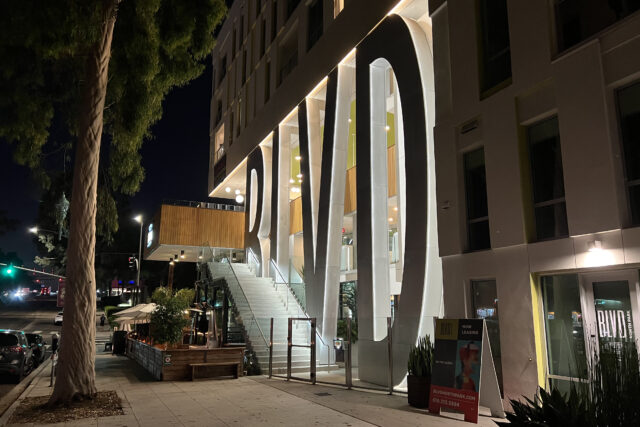
When BLVD North Park—located in University Heights, by the way—started taking applications in summer 2019, projected rents ranged from $1,970 to $4,500. Fast-forward three years, and you might as well start selling off organs to pay for the astronomical increases locally. According to Rent.com: “The average rent for apartments in San Diego, Calif., is between $2,379 and $5,205 in 2022″—for studio and three-bedroom, respectively. One bed: $2,889, up from $2,300 in mid-2019. Two: $3,778, up from $2,823 during the same time period.

Maybe prospective renters should feel good about BLVD North Park, which rates aren’t monumentally pumped up—being already lofty before dramatic increases across the region. An 831-square-foot two beds and baths goes for $3,700, according to a listing on Trulia. That’s within the range that I recall—rightly, hopefully—when the BLVD property opened to residents.

Read More

San Diego Housing is Beyond You

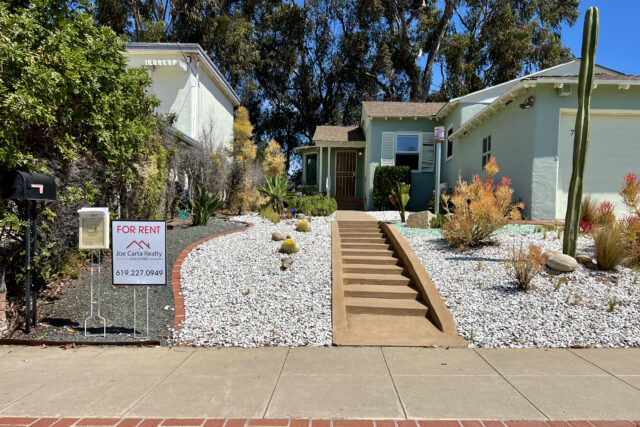
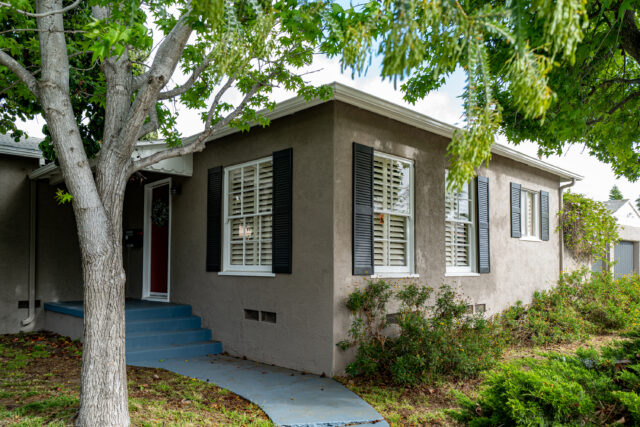
What I want to know: Who rented this University Heights home? When my wife and I passed by on Aug. 3, 2022, a “For Rent” sign welcomed interest—well, until looking at the asking price of, uh-hum, $5,450 monthly. Granted, by square feet, the place is one of the larger houses in our San Diego neighborhood. But who commits to $65,400—more than an annual salary for many locals—to rent?

Buying is no bargain. One of the, ah, affordable homes for sale nearby lists for $1.1 million. Zillow estimates a monthly mortgage payment, along with insurance and taxes, of $5,797; that’s after 20 percent down. Who can afford to buy? Answer: The fine folks at Visual Capitalist rank San Diego as the nation’s third costliest home market, with a median price of $905,000. Necessary salary: $166,828.

Read More

Gone But for Memories

Call me shocked. On several occasions during the two years leading up to the SARS-CoV-2 (severe acute respiratory syndrome Coronavirus 2)/COVID-19 lockdowns—and at least once after they started—I contacted the woman who managed our rental in Kensington, Md. We lived there just shy of a decade, and I felt sentimental about the place. Should the house become available to rent, or to buy, could she let me know? Absolutely. Promises. Promises.

Opportunity passed unbeknownst to me, and I am baffled about missing it. The house, previously purchased for $56,000 in 1965, sold for $475,000 a few months ago. I had checked on the property’s disposition from time to time and never saw a listing, nor is there any indication that there ever was one. Perhaps the tenants bought the place. I’ll never know.

Read More

This is Progress?

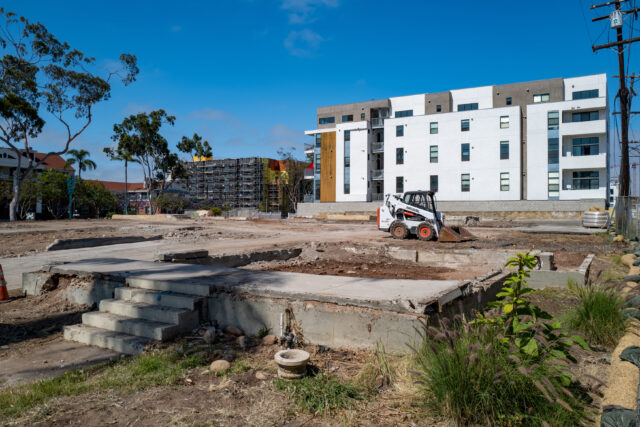
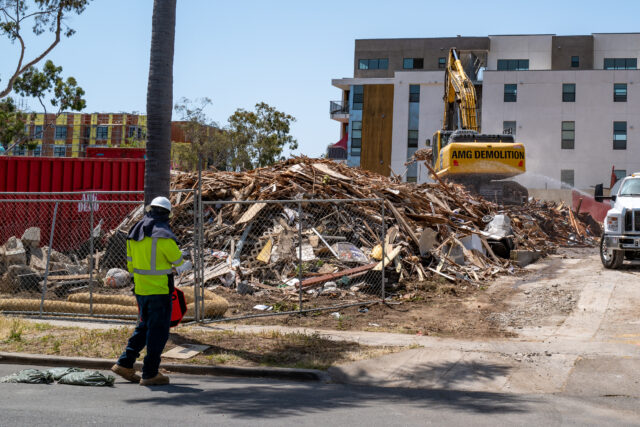
I am not obsessed with the construction site at El Cajon Blvd and Louisiana Street, despite the number of recent photos and commentaries about it: Cave’s Grave; Wonder Wall; Shattered Serenity; Postal Convenience Center. My interest is what the project represents to San Diego neighborhoods Hillcrest, North Park, and University Heights, where relaxation of zoning rules is bringing down charming businesses and homes and replacing them with high-rises that are way out of character with the area.

The Featured Image, taken on May 7, 2022 using Leica Q2, captures before, during, and after multi-unit construction. Foreground looks across the aforementioned recent demolition to a four-story residential complex at Mississippi, overlooking the recently relocated Red Fox Steak House.

Read More

Decorating the Cave’s Grave

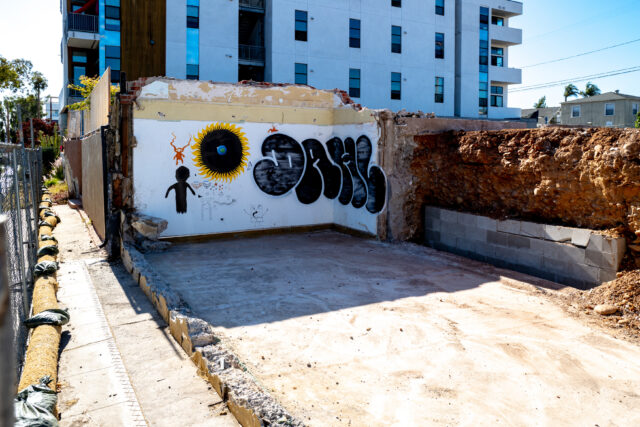
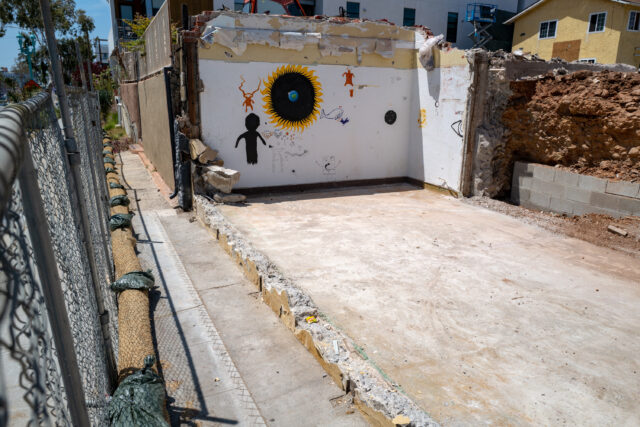
The demolition site at El Cajon Blvd and Louisiana Street in University Heights returns five days later, because of alterations. Remnants remain of the Cave of Wonders building, but somebody has graffitied over some of the doodle drawings of the still-standing inner wall.

In reviewing the Featured Image, I see another change: The livable-looking property that was to the right behind in my previous shots is gone. Vitals, aperture manually set: f/8, ISO 100, 1/160 sec, 28mm; 4:48 p.m. PDT; Leica Q2.

Read More

The Cave of Wonders Wall

New construction is everywhere among several San Diego neighborhoods, following zoning changes meant to encourage multi-unit dwellings. ADUs—so-called accessory dwelling units—add large structures in spaces once considered to be back yards. The spin doctors who sprinkle marketing sugar onto urban renewal medicinals call these buildings Granny Flats. Oh yeah? So why does gran need four to seven residences?

The project at El Cajon Blvd and Louisiana Street is much bigger—and I see similar high-rises, or larger, going up around University Heights, as well as bordering Hillcrest and North Park.

Read More

Fenced Out of Affordable Housing

My daughter rents storage space at one of the local facilities. From my infrequent trips to the place over the years, I have observed stark changes. For starters: An increasing number of people, many of them clearly employed, living out of a vehicle and storing their stuff. With the cost of housing so incredulously expensive in San Diego, these working nomads are not surprising to find. What shocks is how many more I see compared to 18 months ago.

Since a new report about residential renting released this week, I will focus on that topic and let be soaring home selling prices for another time. (If you can’t wait: “Pop Goes Another Housing Bubble” and “Simply Stated: San Diego Unaffordable Housing“.) According to Zumper, rents rose 31.3 percent year-over-year in April 2022. “As a result, San Diego has leapfrogged San Jose and Los Angeles to become the nation’s fifth most expensive city”. Ugh, and I know it’s a fact from watching rents relentlessly rise.

Read More

Shattered Serenity

The difference 24 hours make. Yesterday, the abandoned houses still stood along Louisiana Street at El Cajon Blvd. Today, they—and the businesses around the block—are gone. The Featured Image captures something of the devastation. Vitals: f/8, ISO 100, 1/320 sec, 28mm; 1:26 p.m. PDT. This one and the others come from Leica Q2, aperture manually set for all.

My wife and I have known since summer last year what would happen along one of my favorite blocks in San Diego’s University Heights neighborhood. Two cottage complexes, a few modestly-rising apartment buildings, and bunches of single-story houses—with vast swaths of grass and greenery in an area otherwise converting to cement—create calming ambience. The street is, or was, surprisingly serene. Three residential properties on Louisiana and businesses half-way to Mississippi along The Boulevard are gone.

Read More

Pop Goes Another Housing Bubble

The current housing bubble—and there absolutely is one—bears only modest resemblance to the previous catastrophe, which I warned about in a lengthy August 2005 analysis. Rising mortgage rates already are deflating the 2020’s-decade bubble, but the pop is unavoidable without fundamental changes in the actual market or the myths used to explain existing dynamics.

Since before anyone heard of SARS-CoV-2 (severe acute respiratory syndrome Coronavirus 2)/COVID-19, which economic and societal disruption super-inflated the housing bubble, I had warned about a dangerous trend that ignores common sense observation of national demographics: Among the two largest segments, Baby Boomers are dying off and Millennials aren’t having many kids. As population growth stalls, there will be less demand for housing because there will be fewer people to buy. Meaning: All the babbling about not enough inventory has set into motion an overbuilding frenzy that is sure to deflate home values in the not-so-distant future. Before pandemic lockdowns, I had thought within 10 years. I now expect less than five—if we’re lucky.

Read More

The Cats of University Heights: Leo, Too

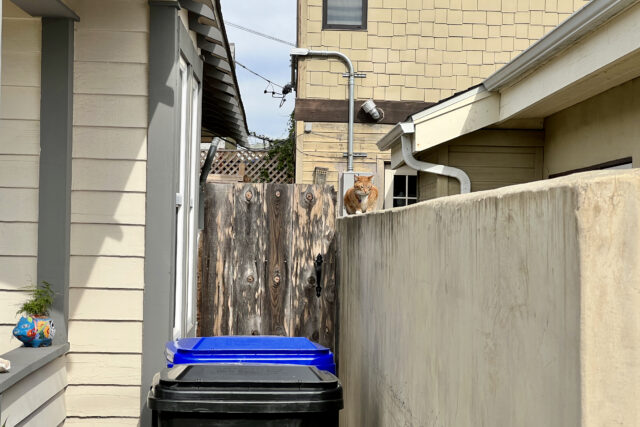
The series‘ second Leo is housemate to Wilbur, whom we met yesterday. I have only seen the ginger once, on Jan. 31, 2022, and continue efforts to clear up a surprising backlog of photographed but not yet published kitties.

About 52 percent of San Diego’s housed residents rent, and with monthly rates rising there has been tremendous turnover during the past 12 months—spurred in part by Silicon Valley tech employees relocating now that they can work at home. You can either blame or credit SARS-CoV-2 (severe acute respiratory syndrome Coronavirus 2)/COVID-19 lockdowns and mandates for the migration—also explanation for fresh cat sightings.