More than 10 years ago, in late October, an abandoned property on North Ave. in San Diego’s University Heights community was fixed up as a neighborhood fright-fest for local kids. I’ve called the place the […]
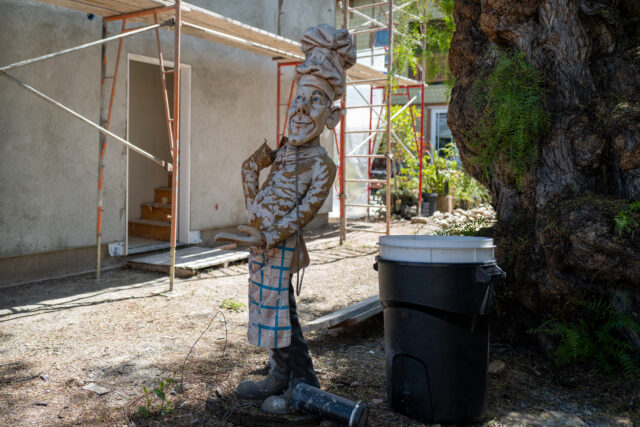
More than 10 years ago, in late October, an abandoned property on North Ave. in San Diego’s University Heights community was fixed up as a neighborhood fright-fest for local kids. I’ve called the place the […]
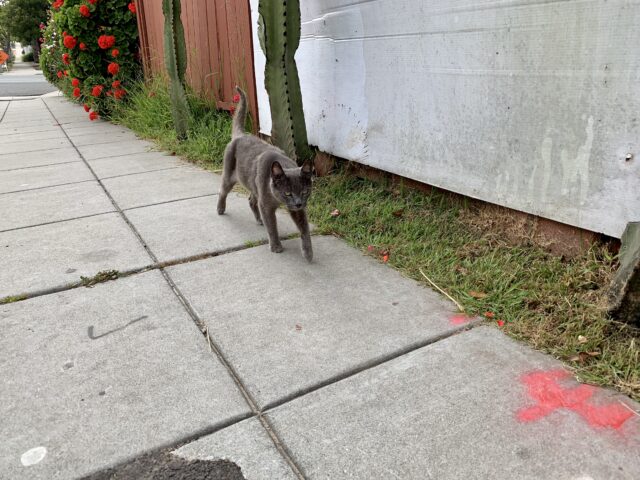
This morning, while we walked along Meade, my wife spotted a grey kitty across the street, nearby a gent whom we had spoken to once many moons ago. Turns out, the slender beauty belongs to him. Meet 13 year-old Lily, who appeared in nearly the same spot as Mittens in October 2017.
I used iPhone XS to capture the Featured Image and its companion. Both portraits are composed as shot. Vitals: f/1.8, ISO 25, 1/1282 sec, 26mm (film equivalent); 9:24 a.m. PDT. The other is same except for 1/1136 sec.
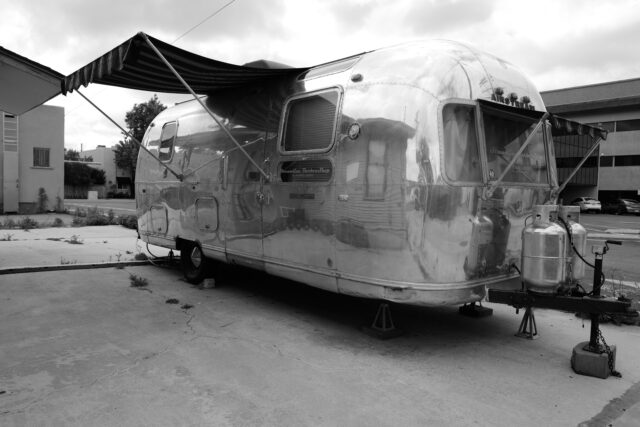
Strange the things you see every day and ignore until the unexpected occurrence draws your attention. Last week, for reasons I won’t bother guessing, YouTube’s algorithm recommended video “I Bought An Airstream! Tiny Home Project” by vlogger Monica Church. Bored, I watched—and, admittedly, intrigued.
Yesterday, while walking along the alley behind Coronavirus-closed LeStat’s, I walked by the Airstream perennially parked there and took fresh notice. With the “shelter-in-place” orders still shuttering most businesses, but restrictions marginally lifting in California, the area was deserted—and I had been looking for something, anything, reasonable to photograph. Out came the Leica Q2.
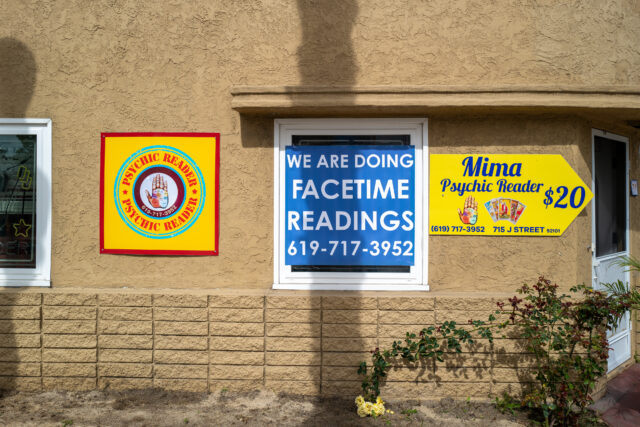
Times are tough for small businesses that thrive on person-to-person contact, courtesy of stay-at-home orders closing commercial operations and schools. California Governor Gavin Newsom has outlined a four-stage reopening ramp-up to semi-normalcy. Nail salons are relegated to the third phase. Psychics, too, perhaps?
How unfortunate, because reliable fortune-telling should be in big-time demand during the pandemic. If I were this soothsayer, who should be able to see the way without my saying, Zoom would be the remote-conferencing choice rather than FaceTime. Gather together a family and offer a group discount, or employees from a (supposedly) temporarily closed business. They have questions, and you have answers!
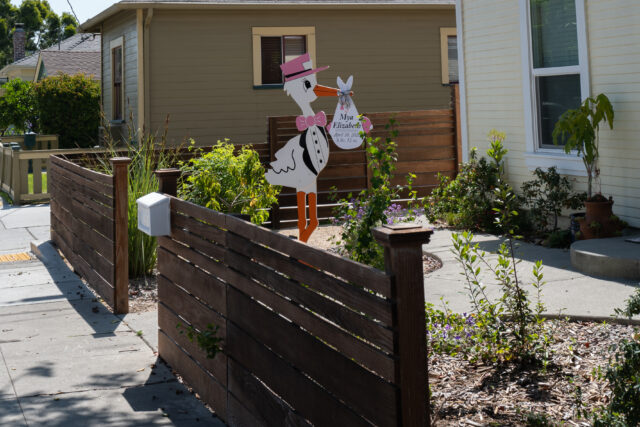
Yesterday, while walking up Monroe Ave. on the west side of San Diego’s University Heights neighborhood, I came upon an unexpected sign of hope—and maybe a little despair—strangely appropriate as Mother’s Day approaches and the […]
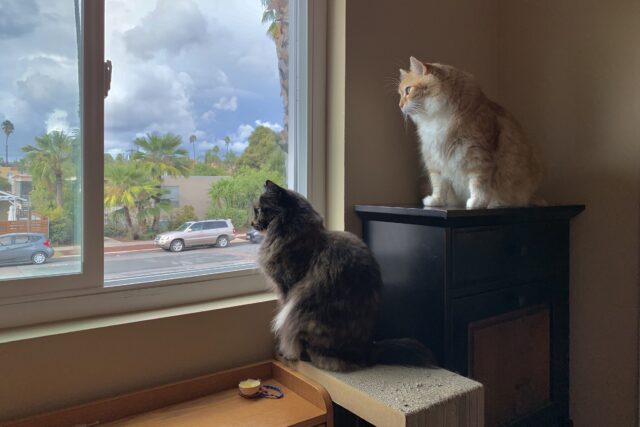
For this fine first Caturday in May, I present a portrait of our kitties rather than one from my “Cats of University Heights” series. Neko sits atop the Casabelle Mail Center purchased from Pier 1 […]
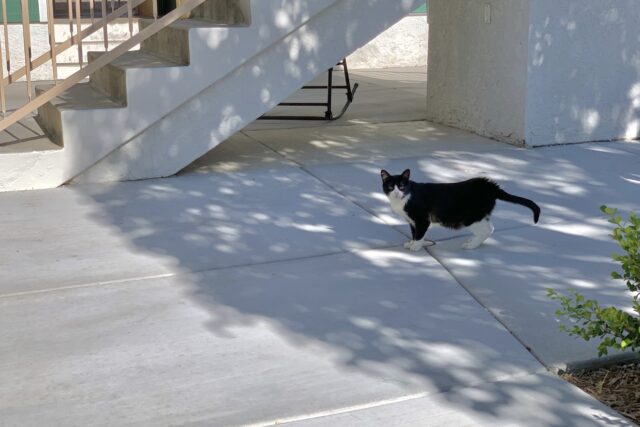
Who would have guessed? Another Bella lives on Alabama—and about a block separates the kitties. The new gal is the fiftieth feline seen on the street, between boundaries Adams and Lincoln; her namesake was profiled in November 2017. Bella, Too lives in the same apartment complex as Penny and where once resided Pedro; he has gone to live with his owner’s parents, whose place provides more run-around space.
The pretty Tuxedo is 15 years old, curious, and energetic. Problem: She recently started having sporadic seizures, that increased from one every few weeks to about every day. Preliminary diagnosis: Brain tumor. I could see during my conversation with her dad how much the affliction bothers him. Which leads into a strange side benefit to the SARS-CoV-2 (severe acute respiratory syndrome Coronavirus 2)—aka COVID-19—lockdown: Working from home means he can monitor her condition, and (my words, not his) maybe ensure she lives longer.
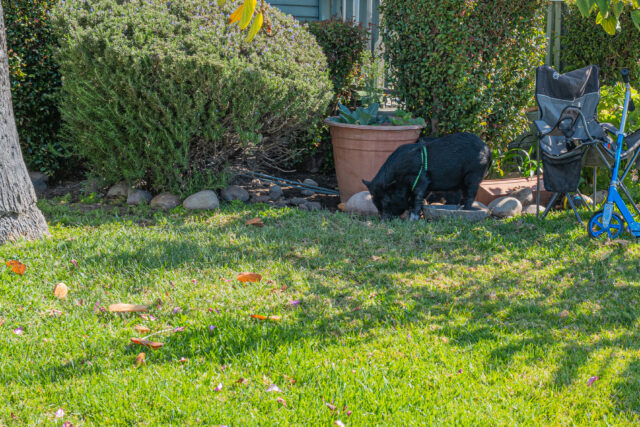
About a month ago, I spotted a porker outside of a cottage apartment that my wife and I briefly considered renting sometime last year. While charming, with excellent windows, and lower monthly obligation than our current place, the one-bedroom flat came up short on living space; we wanted a little more square footage, not lots less. How then is it big enough for the current residents, which I guess includes the pig?
Then there is the question of pet rent, which already is an abomination applied to cats and dogs—and it’s too common a fee here in San Diego. Consider BLVD North Park, which actually is located in University Heights: Prospective tenants pay a $400 deposit for their animals and $50 additional monthly rent for each one. The fifty, even one-hundred, is typical for places demanding the fee—and so is $500 for deposit, which may not be refundable. Landlords could as reasonably pump a pint of blood from each resident, every 14 days, for the plasma. The vampires.
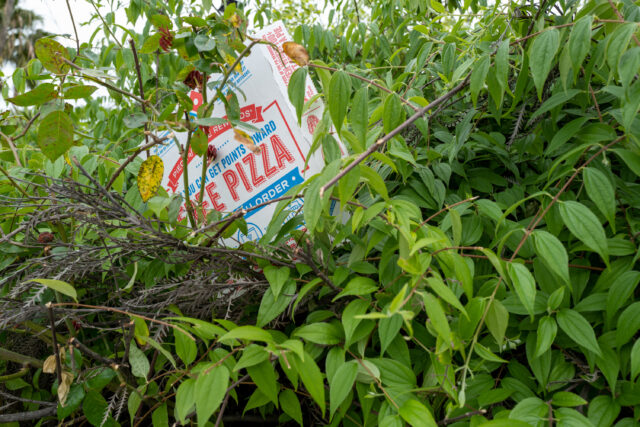
Trash and recycle collection is underway throughout San Diego’s University Heights neighborhood—and, whoa, is it needed. The cans overflow like I’ve not ever seen in the nearly 13 years living here. Shouldn’t surprise with most stores closed and Californians ordered to stay at home (e.g., “shelter-in-place“). Damn the SARS-CoV-2 (severe acute respiratory syndrome Coronavirus 2)—aka COVID-19—pandemic for the catastrophe unleashed on communities, counties, and countries across the globe. As asked three weeks ago: “I Wonder Which Will Flatten First: Us or the Curve?”
The Featured Image (warning: 25MB file), taken on March 31, 2020 using Leica Q2, shows what happens with some of the refuse. The pizza box is one of three stuffed in a hedge. Seriously? Vitals, aperture manually set: f/5.6, ISO 125, 1/125 sec, 28mm; 11:16 a.m. PDT. The companion shot, from the same camera yesterday, gives glimpse of overflowing cans that typically wouldn’t be. Vitals, aperture manually set: f/8, ISO 100, 1/125 sec, 28mm; 4:25 p.m.
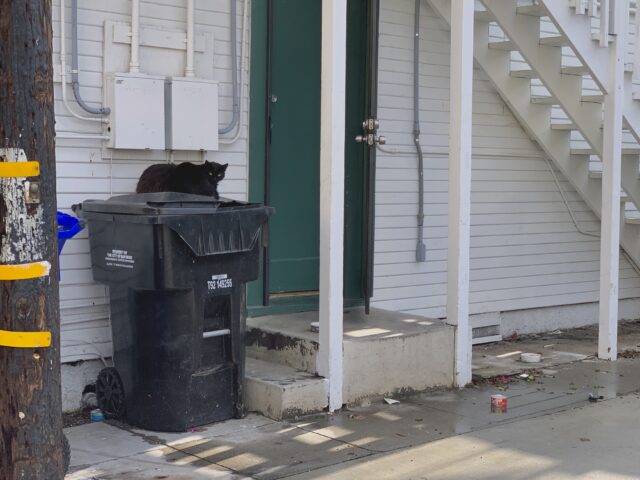
Not long after the series featured Floyd seven months ago, I observed his buddy nearby. But Spring 2020 would come before I snagged even a remotely usable portrait. Look carefully at the Featured Image, and you will discern a second cat on the can; the beasties await their supper on April 7. Pardon the mess, which includes strewn wet food cans; heavy rains fell that day and the previous one. Vitals: f/2.4, ISO 16, 1/392 sec, 52mm (film equivalent); 4:59 p.m. PDT; iPhone XS.
The black earns nickname Dusky for color and early darkening of the late-afternoon sky stemming from imposing storm clouds on March 31, when I used Leica Q2 to capture the companion. Vitals, aperture manually set: f/11, ISO 200, 1/125 sec, 28mm; 5:04 p.m.
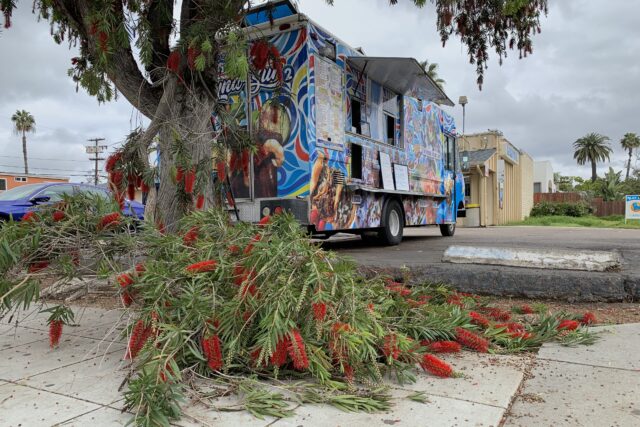
The Taco Truck is a daily fixture, typically gathering a constant line of customers nearly all day long, at the corner of Meade and Texas in San Diego’s University Heights neighborhood. But after California Governor Gavin Newsom issued a statewide “stay-at-home” order on March 19, 2020, the food service operation vanished—for more than three weeks. I wondered why given that eateries offering delivery or take-out were permitted to stay open. What’s not take-away about a food truck serving burritos and tacos?
A few days before April 12, when I shot the Featured Image, the Mexican meals-on-wheels reappeared, but without standing tables alongside for customers and with a whiteboard upon which was scribbled a phone number to place orders to be picked up at the window. I suppose selling something is better than nothing, despite the stolen ambience and charm that made the place popular plus—that is festive and social, and, of course, good eating.

Today, SARS-CoV-2 (severe acute respiratory syndrome Coronavirus 2)—aka COVID-19—claimed an expected victim and long holdout being one. For the first time since its humble 1970 inception, San Diego Comic-Con will not happen as planned (July 23-26). The event joins the County Fair and a multitude of vertically-oriented industry conventions as Novel Coronavirus casualties.
For me, SDCC 2020 already was a non-event: Like the previous two Cons, I failed to secure a pass during Open Registration. For San Diego, which economy depends on tourism, the non-event pandemic is catastrophic. According to the San Diego Tourism Authority, tourism is the “second largest segment of [the local] economy”, employing approximately 200,000 people—or about 13 percent of the jobs across SD County. “It is vitally important to the economic health of the region”.